The Emancipation Proclamation freeing all slaves in Confederate states was signed Jan. 1,1863.
The memo did not make it to Texas until 1865, which marked the actual end of slavery and the birth of Juneteenth.
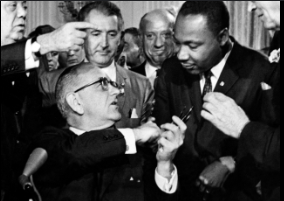
Almost a century later a group of black people banned together in the fight for equality and very basic human rights, like walking into a library, drinking from a water fountain and voting.
Heavy on the basic here, because that’s exactly what it was. The civil rights movement ushered in droves of black people, showing up in their Sunday’s best ready to march on bridges, in the streets, and take their rightful places at diners and in stores while being beaten and spat on, for nothing more than fair treatment. And 60 years later where has that gotten us?
As we head out to the polls this election year to choose another man to take his place in the White House, let’s be reminded of what happens when history does not behave.
- The Civil Rights act was originally passed in 1866 to protect newly freed slaves.
- The 14th Amendment was ratified in 1868 by the southern states guaranteeing black people protection
- The 15th Amendment of 1870 prohibits the government from voter discrimination
- The KKK act of 1871 eliminated violence and offered protection to freed blacks in the south
- The Civil Rights Act of 1875 was passed in response to the increasing violence against black freed citizens, although not completely widespread and effective across the country
- The 1890 Jim Crow laws that forbad black Americans rights associated with citizenship
As you see from the list above, the Civil Rights act had been in the works a century before it was ever signed into law. Of course 60 years later from the actual signing date there is still systematic discrimination (Crown Act, anyone?) and violence towards black Americans.
In the movie Selma, which is based on the voting marches from Selma to Montgomery, AL, there is a scene where Dr. Martin Luther King, Jr. sits down with then-president Lyndon B. Johnson and is explaining how an eruption of violence across the country against blacks was warring and getting worse daily. Because the majority of southern states had not been desegregated at this time, President Johnson felt that black people were not a political priority, yet poverty was.
The sad part about all of this is both the Civil Rights Act and the war on poverty were both introduced in the 60’s and in both, we’ve been running in place ever since. Let’s hope the next 60 years gives us something really worth celebrating for.
 Copywriter | M. Miller
Leave a comment