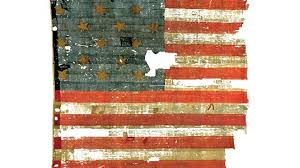
What is widely known about the Star-Spangled Banner is that it was produced in six weeks by famed flag maker Mary Pickersgill in 1813.
Yes, the Star-Spangled Banner and not the United States’ anthem by the same name. Think about it…the flag is a banner, and it’s spangled with stars, right? The Star-Spangled Banner. Ok. This particular version of the flag had both 15 stripes and stars and was flown in celebration of the war won at the Battle of Baltimore in 1814.
If you Google Mary Pickersgill, the pictures may not do justice. And that is because they left out crucial details of her story. What is always mentioned is that Mary, her daughter Caroline, and one of her nieces created the flag. Who is always left out is Grace Wisher, a free-black-girl-turned-indentured-servant. The details from here get a bit murky.
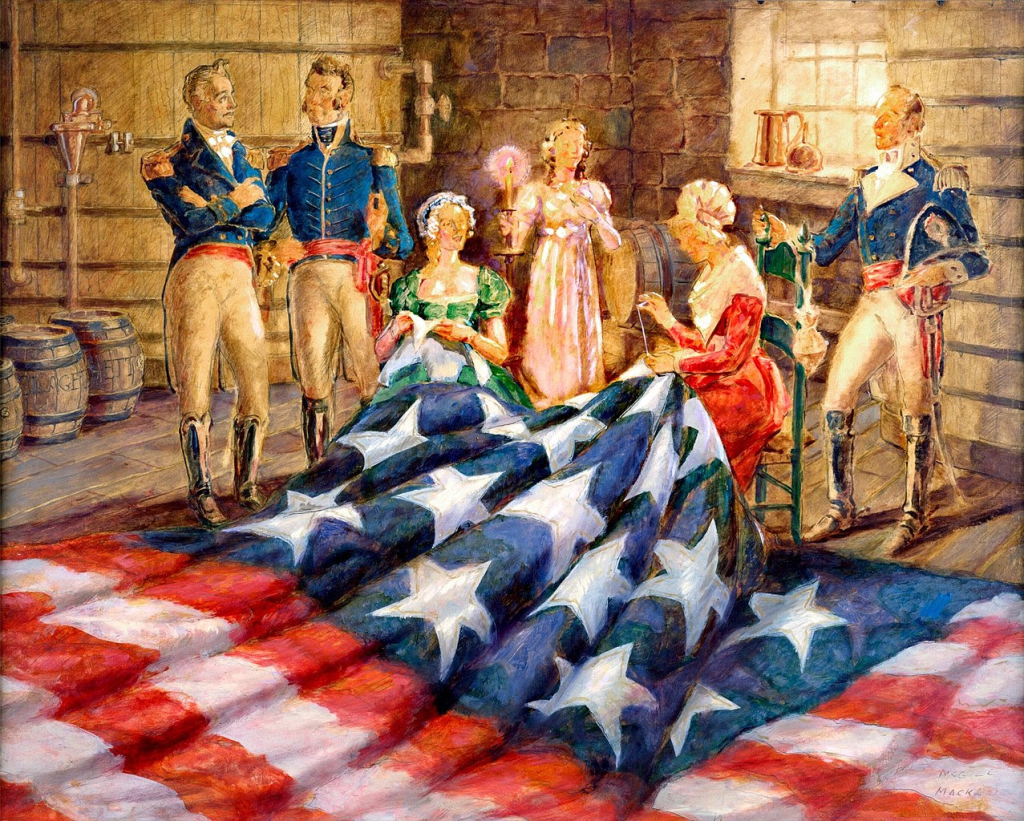
What is known is that she went to live with Mary Pickersgill family in 1810 when she was about 10 years old. Her contract would last for 6 years and excluded education outside of learning the skill of sewing. Until 1817, the law required that those indentured would receive at least a basic education, which was a law hardly followed regarding black children. Cash payments were often paid in substitution of any form of education. Additionally, Mary Pickergill did provide education to a white apprentice in 1814, 13-year-old Mary Ann Martin.
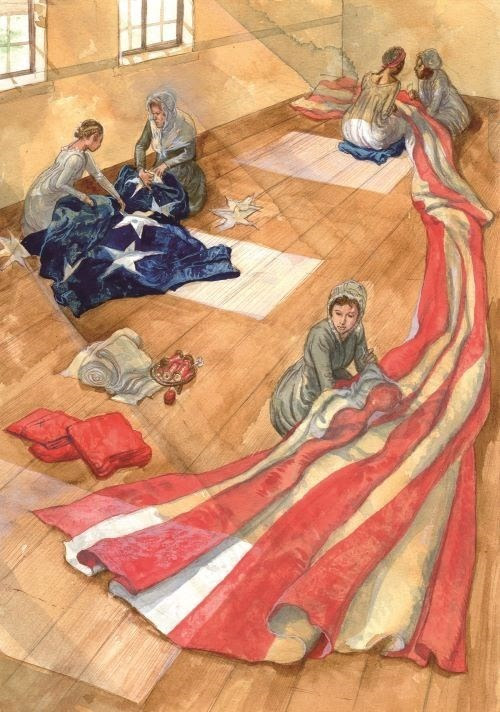
Grace’s mother Jenny Wisher was paid $20 at the beginning of the service and $12 at the end. Grace would’ve been 13 and in her third year of servitude during the construction of the flag in 1813. The few pictures you find when googling the origins of the flag exclude Grace, except for two. There’s one with three young white women and two black women. Through various sources, there is mention of a young, enslaved woman whom Grace shared living quarters and chores with but that is all that is known.
Not even a name.
There is also a black-and-white picture of a young girl standing around folded flags, carefully inspecting one in front of her. This is said to be Grace Wisher.She looks polite, well-dressed in a uniform, possibly, with her hair styled in 2-3 Bantu Knots.
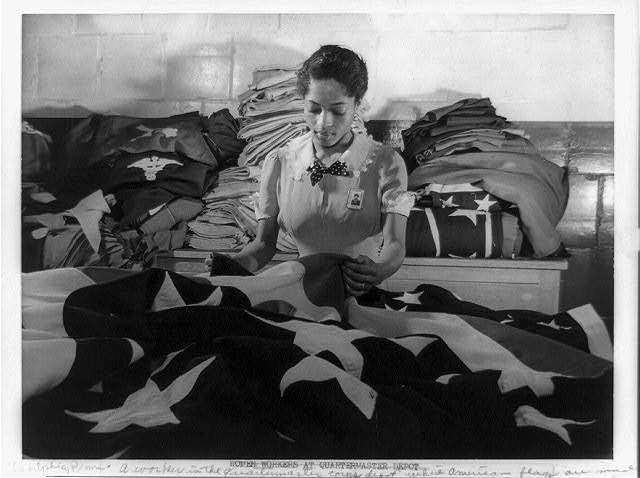
The Bantu Knots Grace is seen wearing in the photo originated in South Africa and is cultural to the Zulu Tribe. Like the American flag is a symbol of protection, pride and identity, so are Bantu Knots.
And so are the millions of black people erased from American History, like Grace. Yes, huge parts of our history are negative and not easily digested. But, by knowing your history and where you come from, you can work to prevent the worst from happening again.
Running from our history has taught us that you can’t outrun it. The more you bury it, the stronger it gets until you’re so tired that all you can do is confront it. America is nowhere near confrontation as we are too busy pretending history never happened. And until we come to terms with the past we will continue becoming a third-world country instead of leaning into our potential as a present-day Wakanda.
 Copywriter | M. Miller
Leave a comment